
How Much Will My Paycheck Actually Be in 2026? (Full Breakdown)
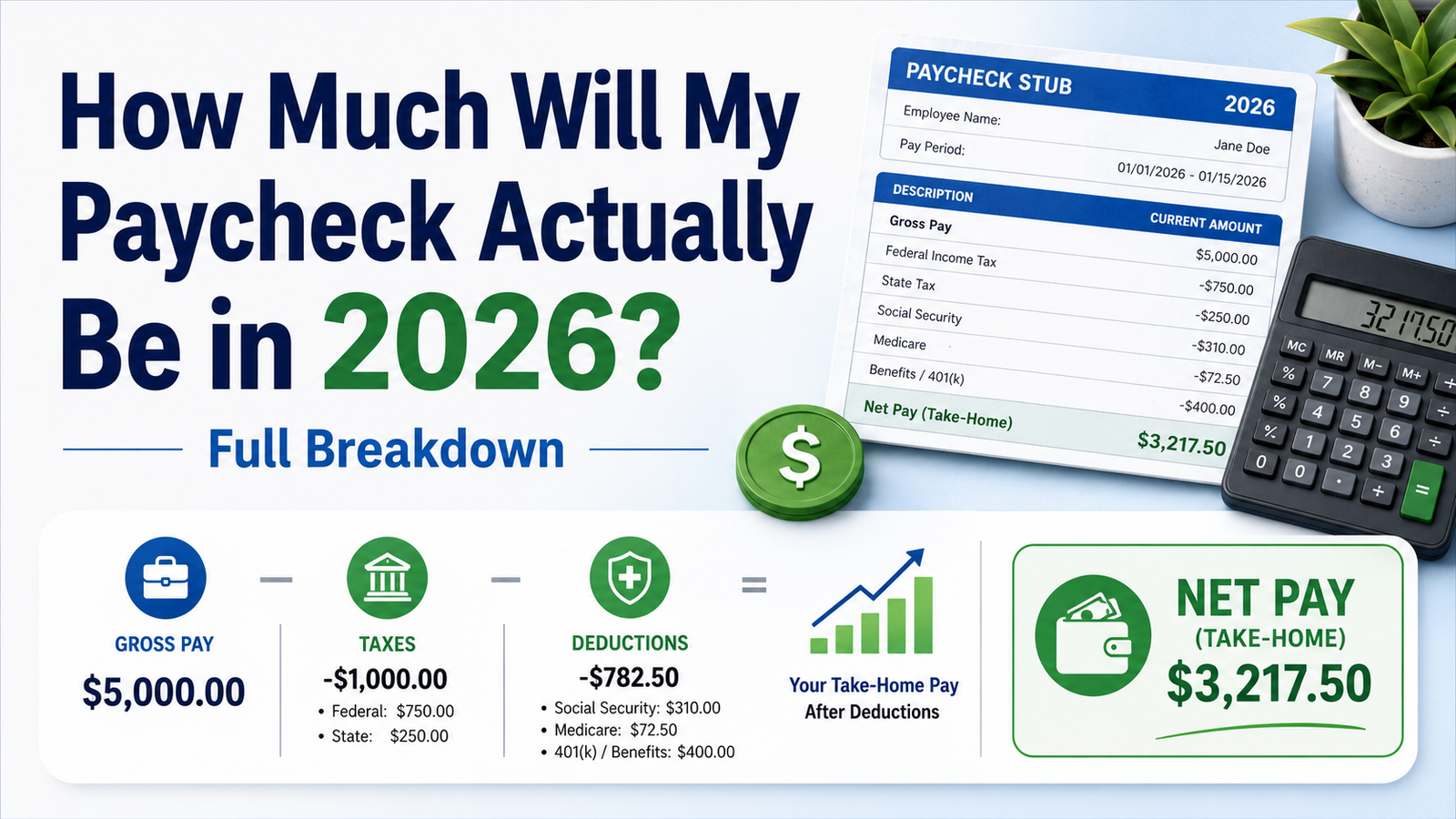
A salary offer tells you your gross pay. Your pay slip tells you what you can actually use. The difference comes from federal income tax, Social Security, Medicare, state tax and any deductions you choose through work.
The easiest way to understand your position is to separate those deductions instead of treating take home pay as a single mystery number.
Gross pay and take home pay are different
Gross pay is the amount earned before deductions. Take home pay is what remains after payroll withholding and deductions. The gap changes with your filing status, pay frequency, state, retirement contributions, health cover and other choices.
The main deductions on a US paycheck
Federal income tax
Federal income tax uses marginal brackets. This means only the part of your taxable income in a bracket is charged at that bracket rate. Moving into a higher bracket does not make all of your income subject to the higher rate.
Social Security and Medicare
Social Security and Medicare are payroll taxes that are separate from federal income tax. The amount withheld can change when your earnings reach the annual Social Security wage limit, while Medicare generally continues across all wages.
State and local tax
State rules are different. Some states do not charge a state income tax on wages, while others use their own rates, deductions or local taxes. Two people with the same salary can therefore receive different pay depending on where they work and live.
Use your own numbers
The US Paycheck Calculator lets you enter salary, filing details, pay frequency and common deductions to produce an estimate for your situation. You can also use the Salary Calculator to compare annual, monthly, weekly and hourly figures.
Pre tax deductions can change the result
Retirement contributions, health plans and other workplace deductions may reduce taxable income, depending on the benefit and the rules that apply. The 401k Calculator can help you explore contribution choices, but your payroll department remains the best source for the exact amount withheld.
Do not forget the cost of living
Take home pay is only one part of the decision. If you are comparing locations, review other costs as well. The Sales Tax Calculator can help you understand how tax at the register affects a budget.
The practical takeaway
Use gross pay to compare job offers, but use estimated take home pay to plan your monthly life. Run your own figures, check the assumptions and confirm important payroll details with your employer or a tax professional.
Worked example: turning salary into gross pay
Suppose a job pays $60,000 per year. That is $5,000 per month before deductions, or about $2,307.69 every two weeks if the employer pays 26 times a year. Your actual deposit will be lower after withholding and any benefits or retirement contributions.
Assumptions and limits
This article explains the calculation, not a guaranteed payroll result. Filing status, allowances, state, pay frequency, benefits and voluntary deductions can change the amount withheld. Tax rules and payroll settings also change, so confirm the current figures with your employer or the relevant tax authority.
Common questions
Why is my first pay different from later pays?
A first pay can cover a partial pay period, include a bonus or use different benefit and withholding settings. Compare the pay-period dates and deduction lines on the payslip.
Is take-home pay the same as taxable income?
No. Take-home pay is the amount deposited after deductions. Taxable income is a separate figure used to determine tax under the applicable rules.